

Why Removing Chlorine from Your Water Matters in Central Ohio Homes
Across Central Ohio, many homeowners are surprised to learn how much chlorine is intentionally added to municipal drinking water. Cities add chlorine as a disinfectant to kill bacteria and pathogens before water reaches your home. While this makes the water safe to drink from a public health standpoint, the chlorine itself can create several long-term problems for your home, plumbing, appliances, and even your skin and hair.
For homeowners in communities like Marysville, Delaware, Bellefontaine, Marion, Upper Sandusky, and the greater Columbus region, chlorine levels can vary significantly depending on the water source, seasonal treatment adjustments, and distance from the treatment plant.
Understanding chlorine levels and what they mean for your home is the first step toward protecting your water quality.
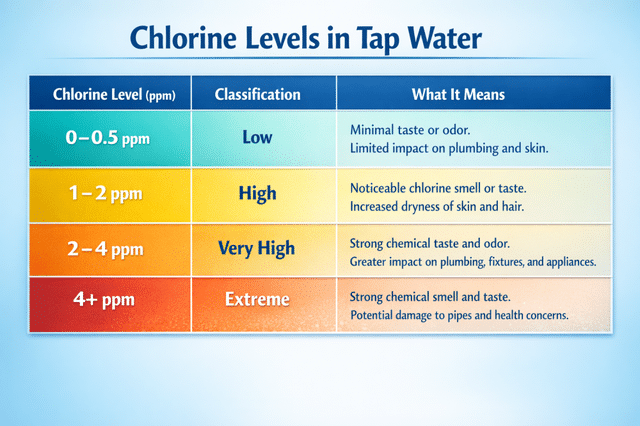
Understanding Chlorine Levels in Tap Water
Chlorine is typically measured in parts per million (ppm). While any measurable chlorine indicates disinfection is present, the amount matters greatly for both taste and long-term exposure.
Chlorine Level Guide
| Chlorine Level (ppm) | Classification | What It Means |
|---|---|---|
| 0 – 0.5 ppm | Low | Minimal taste or odor. Limited impact on plumbing and skin. |
| 1 – 2 ppm | High | Noticeable chlorine smell or taste. Increased dryness of skin and hair. |
| 2 – 4 ppm | Very High | Significant chemical taste and odor. Greater impact on plumbing, fixtures, and appliances. |
| 4+ ppm | Extreme | Strong chemical smell and taste. Long-term exposure will cause accelerated wear on plumbing materials and increased irritation to skin and eyes. |
The EPA allows up to 4 ppm of chlorine in drinking water. While this level is considered safe for disinfection, it does not mean it is ideal for daily exposure in your home.
Many homes across Central Ohio frequently test between 1–3 ppm, especially during warmer months when utilities increase disinfection levels.
How Chlorine Affects Your Home Over Time
Chlorine is a powerful oxidizing chemical, which means it breaks down organic material. Unfortunately, many materials inside your home are also susceptible to oxidation.
1. Plumbing and Pipe Damage
Over time, chlorine can contribute to:
-
Degradation of rubber seals and gaskets
-
Premature failure of flexible plumbing connectors
-
Accelerated corrosion in metal plumbing systems
-
Breakdown of PEX tubing over long periods
In high-chlorine environments, plumbing systems may experience increased maintenance or leaks earlier than expected.
2. Water Heater and Appliance Wear
Appliances that continuously heat water are particularly vulnerable.
Chlorine can contribute to:
-
Faster water heater tank corrosion
-
Reduced lifespan of dishwashers and washing machines
-
Degradation of internal seals and valves
-
Increased sediment and internal wear
For homeowners in Central Ohio, water heaters often represent one of the most expensive appliances affected by untreated chlorine exposure.
3. Damage to Fixtures and Surfaces
Chlorinated water can cause:
-
Fading or spotting on fixtures
-
Damage to rubber washers and O-rings
-
Increased wear on faucets and shower components
Over time, this can lead to leaks, reduced water pressure, or fixture replacement.
Effects of Chlorine on Skin, Hair, and Overall Comfort
Many homeowners first notice chlorine through how their body reacts to it.
Skin Irritation
Chlorine removes natural oils from the skin, which can lead to:
-
Dry or itchy skin
-
Worsening eczema
-
Increased sensitivity or redness
Hair Damage
Chlorine exposure can:
-
Strip natural oils from hair
-
Cause dryness and brittleness
-
Fade hair color
-
Lead to scalp irritation
Eye and Respiratory Irritation
Higher chlorine levels may contribute to:
-
Burning eyes during showers
-
Irritated sinuses
-
Strong chemical smell in steam
This is especially noticeable when chlorine levels reach 2 ppm or higher.
Chlorine Vapor During Showers
One overlooked issue is chlorine vaporization.
When hot water is used, chlorine can become airborne as vapor during showers or baths. This means the body may experience chlorine exposure not only through skin contact, but also through inhalation.
For families with asthma or respiratory sensitivities, reducing chlorine exposure in the home can significantly improve comfort.
Why Whole-Home Chlorine Removal Is the Best Solution
While small faucet filters can help with drinking water, they do not treat water throughout the entire home.
A whole-home carbon filtration system removes chlorine before it reaches:
-
Showers and bathtubs
-
Laundry
-
Water heaters
-
Dishwashers
-
Kitchen sinks
-
Bathroom sinks
Benefits of whole-home chlorine removal include:
-
Improved taste and odor
-
Protection for plumbing and appliances
-
Softer feeling skin and hair
-
Reduced chemical exposure throughout the home
Many modern filtration systems use high-performance catalytic carbon or coconut shell carbon media specifically designed to remove chlorine and other disinfectants from municipal water supplies.
Why Water Testing Is Important in Central Ohio
Because chlorine levels vary by community and season, testing your water is the best way to determine your actual exposure.
A professional water test can identify:
-
Chlorine levels
-
Water hardness
-
Iron or sulfur (for well water)
-
pH balance
-
Other potential contaminants
With accurate testing, homeowners can choose the best water treatment solution for their specific water conditions.