

Pitcher Filters vs. Refrigerator Filters vs. Reverse Osmosis: How Much Are You Really Removing From Your Drinking Water?
When homeowners start thinking about improving their drinking water, one of the first solutions they often try is a filtered water pitcher or the filter built into their refrigerator.
They're inexpensive, convenient and can make tap water taste better.
But there's an important distinction:
Making water taste better isn't necessarily the same as substantially improving what's actually in the water.
For example, what do Nitrates taste like? You can't tell, but they're surely not good for you! Most standard pitcher and refrigerator filters are primarily designed around activated carbon filtration. Carbon can be very effective for improving chlorine taste and odor and reducing certain contaminants, depending on the specific filter and its certifications.
Reverse osmosis is a completely different approach.
Instead of primarily filtering water through carbon media, a reverse osmosis system uses a semipermeable membrane along with multiple filtration stages to significantly reduce a much broader range of dissolved contaminants.
So how do the three options actually compare?
What Does a Pitcher Water Filter Actually Remove?
Pitcher filters are popular for good reason. They're inexpensive, require no plumbing and are available almost everywhere.
Most traditional pitcher filters use activated carbon, sometimes combined with ion-exchange media.
Pros of Pitcher Filters
• Low upfront cost
• No installation required
• Portable and easy to use
• Can reduce chlorine taste and odor
• Some certified models reduce additional contaminants such as lead
• Better tasting water may encourage people to drink more water
Cons of Pitcher Filters
• Contaminant reduction varies significantly between brands and models but remains very limited
• Standard carbon filtration generally does not substantially reduce total dissolved solids (TDS)
• Many dissolved minerals, salts and ions remain in the water
• PFAS reduction is highly dependent on the specific filter and certification
• Microplastic reduction capabilities vary by filter design
• Filters require frequent replacement
• Small capacity can be inconvenient for families
• Water filters slowly compared with a dedicated drinking water system
A pitcher can be a perfectly reasonable option if your primary concern is improving the taste and smell of municipally treated water.
But consumers shouldn't assume that because their water passed through a pitcher, it has undergone comprehensive purification.
What About Your Refrigerator Water Filter?
Refrigerator filters are another convenient option.
In many homes, they're essentially an upgraded version of drinking directly from the tap. Water passes through a replaceable filter before reaching the refrigerator dispenser or ice maker.
Most refrigerator filters rely heavily on activated carbon.
Pros of Refrigerator Filters
• Extremely convenient
• Provides filtered cold water on demand
• Can improve chlorine taste and odor
• Can improve the taste of ice
• Certain certified models can reduce lead and other specific contaminants
• No separate faucet or countertop pitcher is required
Cons of Refrigerator Filters
• Reduction capabilities vary substantially by manufacturer and model
• Most aren't designed to dramatically reduce TDS
• Dissolved salts and many dissolved substances can pass through
• PFAS reduction should never be assumed without checking the specific filter's certification
• Heavy metal reduction varies by filter
• Microplastic reduction varies
• Replacement filters can become expensive over time
• Performance depends on changing the filter at the recommended interval
One of the biggest mistakes homeowners make is assuming a refrigerator filter is a comprehensive purification system.
For many refrigerators, taste and odor improvement is the primary benefit.
Why Reverse Osmosis Is Different
Reverse osmosis, commonly called RO, doesn't simply improve the taste of water.
It's designed to provide a much higher level of drinking water treatment.
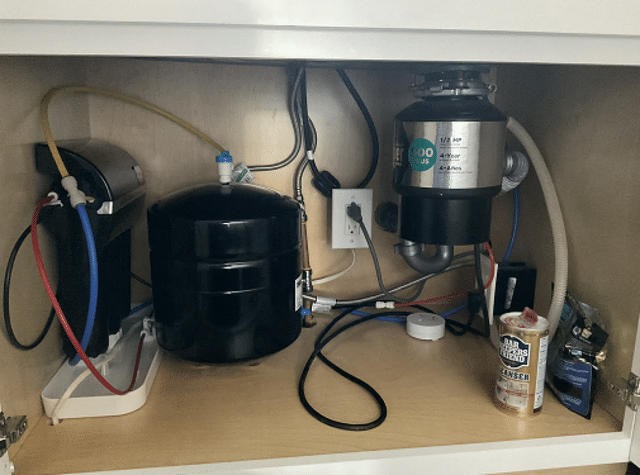
A quality RO system typically sends water through multiple treatment stages that can include sediment filtration, activated carbon, a reverse osmosis membrane and post-filtration.
The RO membrane is the major difference.
Water is forced through a specialized semipermeable membrane that rejects a large percentage of dissolved substances that conventional carbon filters may leave behind.
Depending on the specific system and its certifications, reverse osmosis can substantially reduce contaminants such as:
• Lead and other heavy metals
• Arsenic
• Nitrate and nitrite
• Fluoride
• Dissolved salts
• PFAS compounds such as PFOA and PFOS
• Certain pesticides and chemicals
• Chromium
• Copper
• Barium
• Radium
• Microplastics and other fine particulates
• Many other dissolved contaminants
The exact reduction percentage always depends on the specific RO system, membrane and certifications, which is why consumers should compare certified performance data rather than relying solely on marketing claims.
What About TDS?
This is one of the easiest ways to understand the fundamental difference between carbon filtration and reverse osmosis.
TDS stands for Total Dissolved Solids.
TDS represents dissolved substances in water, including minerals, salts and other ions. TDS by itself is not a measurement of whether water is safe or unsafe. Some dissolved solids are harmless or even desirable.
However, TDS demonstrates something important about filtration.
A conventional carbon pitcher or refrigerator filter may make water taste considerably better while leaving much of its dissolved content essentially unchanged.
Reverse osmosis is specifically designed to reject a large percentage of dissolved solids.
For example, if tap water measures 300 ppm TDS, running it through a typical carbon refrigerator filter will result in little change to that number.
A properly operating reverse osmosis system, however, would normally produce a substantial reduction.
That's because carbon adsorption and reverse osmosis membrane separation are fundamentally different treatment technologies.
What About PFAS or "Forever Chemicals"?
PFAS has become one of the biggest drinking water concerns across the country.
These synthetic chemicals have been used in numerous industrial and consumer products and are known for their persistence in the environment.
The important thing for homeowners to understand is that not every water filter is certified for PFAS reduction.
Some specialized pitcher and refrigerator filters may reduce certain PFAS compounds, but consumers should verify the manufacturer's independent certification and performance data.
Reverse osmosis is one of the technologies commonly used for reducing PFAS in drinking water.
Again, the specific RO system matters. Look for independently tested or certified contaminant reduction claims rather than assuming every product labeled "RO" performs identically. NSF, ANSI, WQA certifications ARE IMPORTANT!
What About Heavy Metals?
This is another category where reading the fine print matters.
Some higher quality pitcher and refrigerator filters are certified to reduce lead and potentially other specific metals.
Others aren't.
Reverse osmosis systems can reduce a much broader range of dissolved inorganic contaminants and heavy metals when designed and certified for those reductions.
If contaminants such as lead, arsenic, chromium, barium or other metals are a concern, choosing a system based solely on taste improvement isn't enough.
Look at the actual performance data.
What About Microplastics?
Microplastics are another emerging concern in drinking water.
The ability of a filter to capture particles depends heavily on particle size and the filtration technology being used.
Some pitcher and refrigerator filters may capture certain particulate matter, but performance varies significantly.
Reverse osmosis membranes operate at an extremely small separation scale and provide a much stronger physical barrier than conventional carbon filtration.
For homeowners concerned about extremely small particles and a broad spectrum of dissolved contaminants, this is another major advantage of RO technology.
Pitcher vs. Refrigerator Filter vs. Reverse Osmosis
Here's a simplified comparison:
| Category | Pitcher Filter | Refrigerator Filter | Reverse Osmosis |
|---|---|---|---|
| Chlorine Taste & Odor | Good | Good | Excellent with carbon stages |
| TDS Reduction | Minimal | Minimal | Excellent |
| Dissolved Salts | Limited | Limited | Excellent |
| Lead | Model Dependent | Model Dependent | Excellent on properly certified systems |
| Other Heavy Metals | Limited / Model Dependent | Limited / Model Dependent | Broad Reduction Capability |
| PFAS | Limited | Limited | Strong Reduction Capability |
| Microplastics | None | None | Strong Reduction Capability |
| Nitrates | Limited | Limited | Strong Reduction Capability |
| Arsenic | Limited | Limited | Strong Reduction Capability |
| Fluoride | Limited | Limited | Strong Reduction Capability |
| Taste & Odor | Good | Good | Excellent |
| Installation | None | Built Into Appliance | Professional Installation |
| Initial Cost | Low | Low to Moderate | Higher |
| Overall Treatment Level | Basic | Basic | Advanced |
*Actual contaminant reduction varies by manufacturer and model. Always review the specific system's certified performance data.
Does Reverse Osmosis Make Water More Like Bottled Water?
This is where RO really separates itself from basic filtration.
Many bottled water products use reverse osmosis or other purification processes before bottling. Some manufacturers then add minerals back into the purified water to create a particular taste profile.
A properly designed residential reverse osmosis system uses similar treatment principles right in your home.
Instead of continually buying cases of bottled water, you can have highly treated drinking water available directly from a dedicated faucet and, in many installations, connected directly to your refrigerator and ice maker.
Some RO systems also include remineralization or alkaline stages that add selected minerals back into the water after the RO membrane.
This can create drinking water that is significantly different from simply running municipal tap water through a carbon pitcher or refrigerator filter.
Is a Pitcher or Refrigerator Filter Bad?
Not at all.
The important thing is understanding what you're actually buying.
If your goal is:
"I don't like the chlorine taste of my tap water."
A quality carbon pitcher or refrigerator filter may be all you need.
If your goal is:
"I want to substantially reduce what's dissolved in my drinking water and address contaminants such as PFAS, heavy metals, nitrates, microplastics and other substances."
That's when reverse osmosis becomes a very different solution.
Think of pitcher and refrigerator filters primarily as filtration and taste improvement devices.
Think of reverse osmosis as a more comprehensive drinking-water treatment system.
Don't Judge a Water Filter by Taste Alone
One of the biggest misconceptions about drinking water is that better tasting water automatically means substantially cleaner water.
It doesn't.
Chlorine is relatively easy to reduce with activated carbon. Once chlorine taste and odor disappear, water may taste dramatically better even though many dissolved substances remain.
That's why it's important to look beyond taste.
Ask:
What contaminants has this system actually been tested or certified to reduce?
That's a much better question than simply asking whether a filter makes water taste better.
Find Out What's Actually in Your Water
There isn't one drinking-water system that's right for every home.
Your water source, local water chemistry, plumbing and specific concerns should determine the treatment you choose.
At Clean Water Ohio, we help Ohio homeowners understand their water before recommending treatment. We can test your water, discuss your concerns and explain the differences between basic filtration and more advanced drinking-water treatment options such as reverse osmosis.
Whether you're currently drinking straight from the tap, using a refrigerator filter, filling a pitcher every day or buying cases of bottled water, understanding what's actually being removed is the first step toward choosing the right solution.
Contact Clean Water Ohio to schedule a free water analysis and learn what drinking water treatment options make sense for your home.