

Reverse Osmosis vs. Bottled Water vs. Refrigerator Filters vs. Pitcher Filters: What's the Difference?
Reverse Osmosis vs. Bottled Water vs. Refrigerator Filters vs. Pitcher Filters: What’s the Difference?
When homeowners want better drinking water, there are usually four options they consider: bottled water, a pitcher filter, a refrigerator filter, or a reverse osmosis (RO) system.
All four can improve your drinking water experience, but they are very different in what they are designed to do. Some primarily improve taste and odor, while others provide much more comprehensive filtration.
Here’s how they compare.
Pitcher Water Filters
Pitcher filters are one of the easiest and least expensive ways to start filtering your drinking water. Fill the pitcher, let the water pass through the filter, and store it in the refrigerator.
Most standard pitcher filters primarily use activated carbon and are designed to improve chlorine taste and odor. Depending on the specific filter and its certifications, some may also reduce additional contaminants.
Pros:
- Low upfront cost
- No installation required
- Can improve chlorine taste and odor
- Easy to find replacement filters
Cons:
- Limited capacity
- Requires frequent refilling
- Filter replacements add ongoing cost
- Standard models generally provide much less comprehensive contaminant reduction than RO
- Reduction capabilities vary significantly by model
Best for: Someone looking for an inexpensive and simple improvement in the taste of their tap water.
Refrigerator Water Filters
Refrigerator filters offer convenience because filtered water is available directly from your refrigerator dispenser.
Like pitcher filters, most refrigerator filters rely heavily on activated carbon. They can be very effective at improving chlorine taste, odor, and certain other contaminants, depending on the filter.
Their biggest limitation is that they generally aren't designed to provide the broad contaminant reduction of a reverse osmosis membrane.
Pros:
- Extremely convenient
- No separate faucet or pitcher
- Improves taste and odor
- Usually easy to replace
Cons:
- Replacement filters can be expensive
- Filtration capabilities vary by refrigerator and filter
- Does not typically provide the broad reduction capabilities of RO
- Does not significantly reduce overall dissolved mineral content or TDS
Best for: Homeowners who prioritize convenience and primarily want their tap water to taste and smell better.
Bottled Water
Bottled water can provide good-tasting drinking water without requiring any equipment in your home. However, quality varies considerably between brands.
Some bottled water is purified through reverse osmosis or other advanced treatment methods, while other products may come from municipal or spring sources and receive different levels of treatment.
The biggest disadvantages are usually cost, storage, transportation, and plastic waste.
Pros:
- Convenient when away from home
- No equipment to maintain
- Many purified brands provide excellent water quality
- Easy to store for emergencies
Cons:
- Can become expensive with daily use
- Requires buying, transporting, and storing bottles
- Creates significant plastic waste
- Water quality varies by brand and source
- You continually pay for every gallon you consume
Best for: Occasional use, travel, emergencies, or households that don't want to install a filtration system.
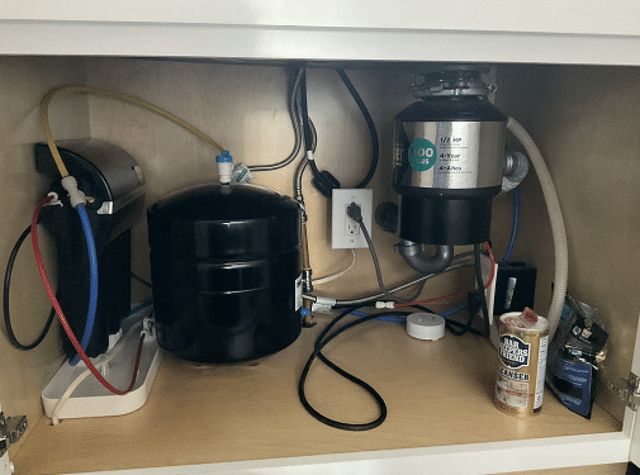
Reverse Osmosis Drinking Water Systems
Reverse osmosis takes a fundamentally different approach.
Instead of primarily filtering water through carbon, an RO system uses a semipermeable membrane to separate many dissolved substances from the drinking water. Most residential RO systems combine this membrane with sediment and carbon filtration.
Depending on the system and its third-party certifications, RO can reduce a broad range of contaminants that basic pitcher and refrigerator filters may not be designed to address, potentially including:
- Lead and other heavy metals
- Arsenic
- Nitrates
- PFAS
- Certain chemicals and VOCs
- Dissolved salts and minerals
- Total dissolved solids (TDS)
- Certain emerging contaminants
Specific reduction claims depend on the individual system, so homeowners should always review its NSF/ANSI or other independent certifications rather than assuming every RO performs the same.
Pros:
- Much broader filtration than typical pitcher or refrigerator filters
- Significantly reduces TDS
- Can reduce many dissolved contaminants
- Provides purified water directly from your home
- Eliminates much of the need for bottled water
- Low cost per gallon over the life of the system
Cons:
- Higher upfront cost
- Requires installation
- Filters and membranes require periodic replacement
- RO produces some wastewater during purification
- Performance and efficiency vary between systems
Best for: Homeowners who want a significant improvement in drinking water quality rather than primarily improving taste and odor.
How Do They Compare?
| Feature | Pitcher Filter | Fridge Filter | Bottled Water | Reverse Osmosis |
|---|---|---|---|---|
| Improves Taste/Odor | Yes | Yes | Yes | Yes |
| Chlorine Reduction | Yes | Yes | Varies | Yes |
| TDS Reduction | Very Limited / No | Very Limited / No | Varies | High |
| Broad Contaminant Reduction | Limited | Limited | Varies | High |
| PFAS Reduction | Very Limited / No | Very Limited / No | Varies | System Dependent |
| Heavy Metal Reduction | Very Limited / No | Very Limited / No | Varies | System Dependent |
| Water Available On Demand | Limited | Yes | No | Yes |
| Requires Refilling | Yes | No | Yes | No |
| Creates Bottle Waste | No | No | Yes | No |
| Upfront Cost | Low | Low/Included | Low | Higher |
| Long-Term Cost | Moderate | Moderate | High | Low to Moderate |
Which Option Is Best?
It depends on what you're trying to accomplish.
If you simply dislike the chlorine taste of your tap water, a pitcher or refrigerator filter may be all you need.
If you want something portable or don't want equipment installed, bottled water is convenient, although the long-term cost can add up quickly.
But if your goal is to substantially improve the quality of the water you're drinking every day, reverse osmosis is generally the most comprehensive option of the four.
An RO system isn't simply a better-tasting-water filter. It's designed to address many dissolved substances that basic carbon filtration leaves behind.
Don't Compare Filters by Appearance — Compare Their Certifications
One of the most important things homeowners can do is look beyond marketing claims.
A filter saying it provides "clean," "pure," or "healthy" water doesn't tell you what it actually removes.
Look for independent NSF/ANSI or WQA testing and certifications showing exactly what a particular system has been tested to reduce.
That's especially important when comparing reverse osmosis systems. Two systems may both be called "RO systems" while having very different contaminant reduction claims, efficiency, construction quality, filter life, and certifications.
The Bottom Line
Pitcher and refrigerator filters are great for convenience and improving taste. Bottled water can provide high-quality drinking water but comes with an ongoing cost. Reverse osmosis goes significantly further by providing advanced filtration directly in your home.
For homeowners who are currently buying cases of bottled water or constantly replacing pitcher and refrigerator filters, a properly designed RO system can provide a more convenient and economical long-term solution while delivering substantially more comprehensive filtration.
Before choosing any drinking water system, start by finding out what's actually in your water. A water test can help determine whether you simply need better-tasting water or would benefit from more advanced filtration.
If you want a FREE water test and estimate on a solution for your home! Give us a call at 1-419-420-5939 or request online here !